October 26, 2026
Posted on: 6/12/2026

ATPE Governmental Relations is always seeking new ways to incorporate members’ voices into our advocacy work. To that end, we recently began conducting short surveys on specific policy issues Texas legislators are—or should be—addressing. As ATPE’s governmental relations director, I’m pleased to report that responses to the first two surveys exceeded my expectations. I want to highlight a few survey results and encourage even more members to participate as we continue using these brief surveys to gather feedback on important issues. These survey results informed our testimony during the May 11 and June 1 House Public Education Committee interim hearings.
The two recent surveys covered school-provided student technology, the recently passed cell phone ban, teacher pay through the Teacher Incentive Allotment (TIA) and Teacher Retention Allotment (TRA), and special education.
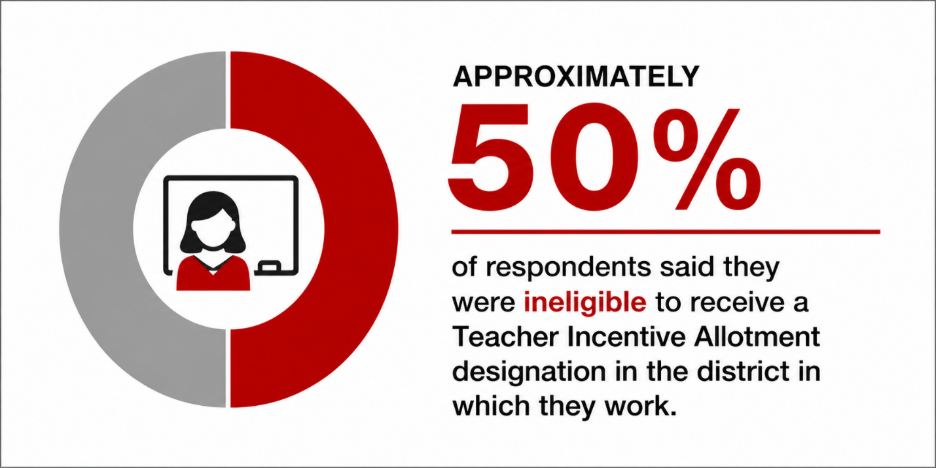
When we asked members whether they were eligible for TIA under their district’s or charter’s plan, as well as whether they were currently or had ever been TIA-designated, we found:
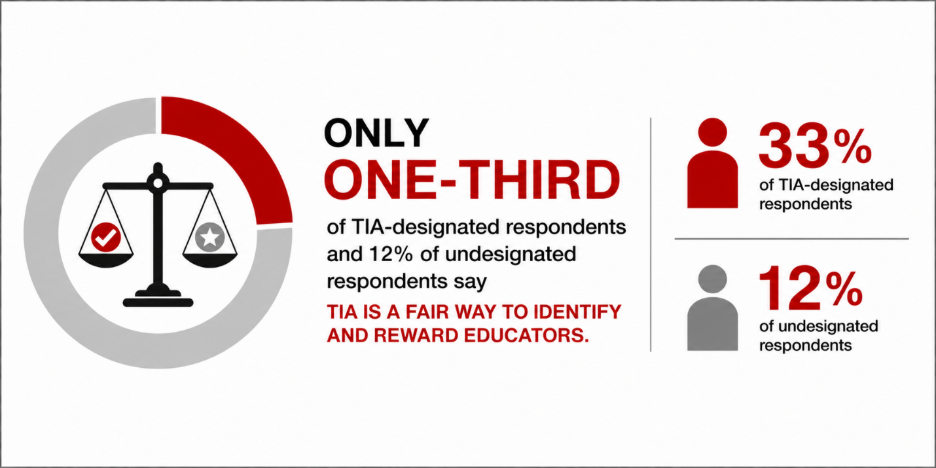
We also asked whether members view TIA as a fair and effective way to identify and reward educators. Only one-third of TIA-designated respondents and 12% of undesignated respondents said TIA was a fair system. By contrast, more than half of TIA-designated respondents and more than 70% of undesignated respondents said it was not. Results were similar on effectiveness: Fewer than one-third of designated respondents and only 12% of undesignated respondents said TIA effectively rewards educators for the quality of their work, while 50% of designated respondents and 68% of undesignated respondents disagreed.
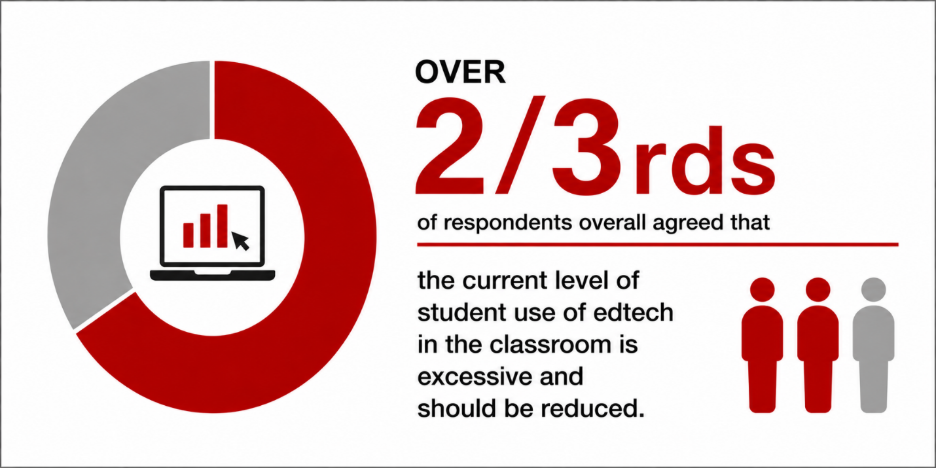
Regarding district-provided student educational technology (ed tech), responses varied on its effect on student engagement, outcomes, and educator workload. Even so, more than two-thirds of respondents agreed that current classroom use of student ed tech is excessive and should be reduced and that it should not be used where research does not support it. At the other end of the spectrum, fewer than 5% of respondents said student ed tech use should be increased.
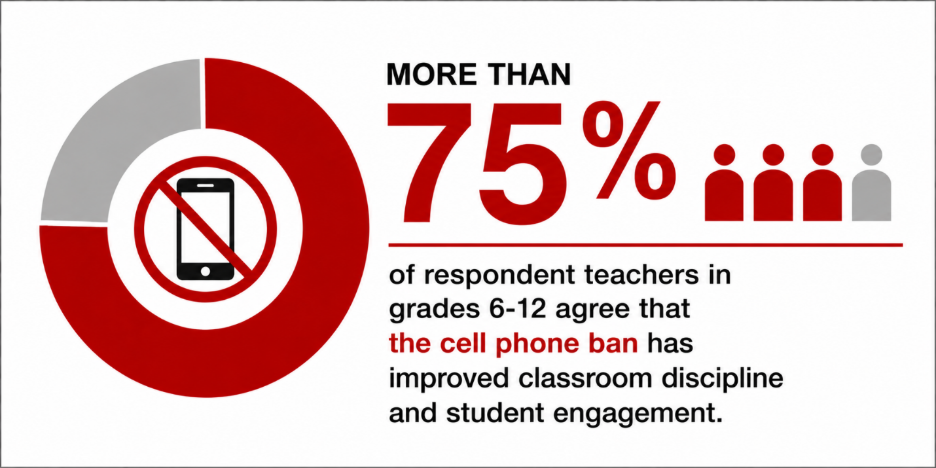
When asked about the cell phone ban passed by the 2025 Texas Legislature, a strong majority of respondents across all grade levels expressed support. More than 75% of teachers in grades 6–12 said the ban has improved classroom discipline and student engagement.
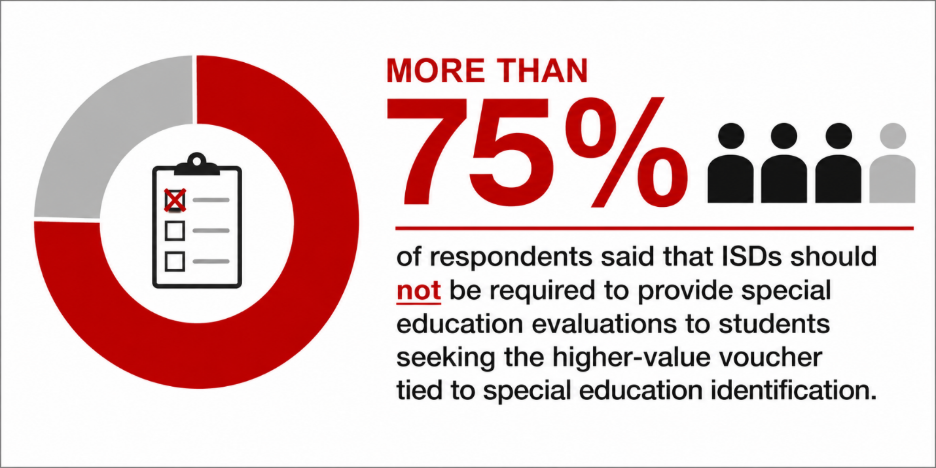
Finally, in the special education section, we asked members: “Assuming the state continues using its current voucher system, should public schools be responsible for providing special education evaluations for students seeking the higher-value voucher tied to special education identification?” More than 75% of respondents said ISDs should not be required to provide those evaluations.
On behalf of the ATPE Lobby Team, I want to thank the hundreds of members who took a few moments to share their views. Your voices matter, and when you share them with us, it strengthens our message at the Texas Capitol.