November 06, 2026
Posted on: 11/9/2026 | By Tricia Cave
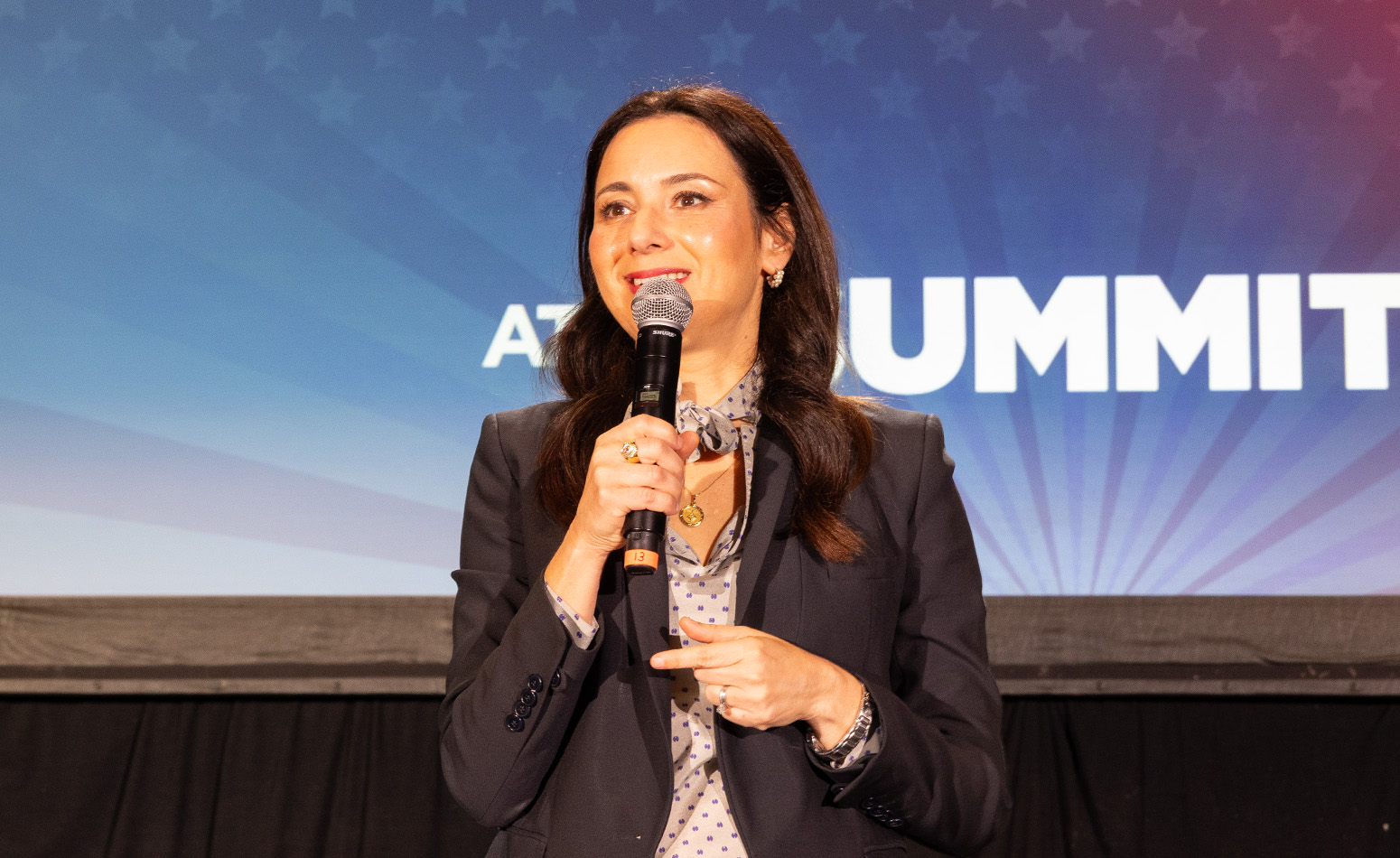
Gov.-elect Gina Hinojosa (D) speaks at the 2026 ATPE Summit in San Antonio July 16. Both she and her opponent Gov. Greg Abbott (R) were invited to the summit, but only Hinojosa accepted ATPE's invitation.
After decades under Abbott, Perry and Bush, Gina Hinojosa’s election as Texas governor gives public education advocates a fresh opportunity to change the direction of state education policy. The governor-elect campaigned on and made public education central to her policy goals. The significance of her victory extends beyond her campaign promises, however. The office of the governor has considerable authority over state agencies, appointments to boards, and the final approval of legislation and the state budget. These powers give Hinojosa significant influence over policy, even with a Republican-controlled Senate that may be reluctant to work with her.
Hinojosa has pledged to increase public school funding, oppose vouchers, end takeovers of school districts, and replace the STAAR test. She has also promised to replace Texas Education Agency Commissioner Mike Morath “on day one.” Morath, seemingly in acknowledgement of this, gave what is being referred to as a farewell speech in an appearance with superintendents last week.
Replacing Morath would be one of her most immediate opportunities to change the direction of state education policy. The Commissioner oversees the Texas Education Agency and has considerable authority over how the state implements education laws, administers accountability systems, and oversees school districts. A new commissioner could bring different priorities to the agency and change how existing laws and regulations are carried out. Additionally, Hinojosa has made clear that she considers the agency to be bloated and have too much staff. It is likely that under her administration a scaling down of the agency will happen, with turnover likely in key roles due to vision realignment.
Hinojosa will also have a hand in shaping two boards with significant influence over public education: the State Board of Education (SBOE) and the State Board for Educator Certification (SBEC).
The governor appoints the chair of the SBOE from among its elected members, subject to Senate confirmation. The chair has considerable influence over the board’s agenda and how it conducts its business. As the SBOE continues to make decisions about curriculum standards, instructional materials, and other statewide education policies, the governor’s choice of chair will steer those discussions.
Hinojosa also appoints members of SBEC as positions become vacant or terms expire. SBEC oversees educator certification, preparation, and professional standards. Its decisions have a direct impact on the requirements teachers must meet to enter and remain in the profession. While staggered terms mean Hinojosa will not immediately have the opportunity to reshape the entire board, her appointments could gradually change its priorities and approach to educator policy.
These appointments are especially important because they allow a governor to influence education policy even when the Legislature is not willing to pass new laws. Agency leadership and board membership help determine how existing laws are interpreted, implemented, and enforced. Hinojosa’s choices will be worth watching just as closely as the bills lawmakers consider during the next session.
Hinojosa will face a Republican-controlled Senate that may not be interested in advancing her priorities. However, the governor has constitutional powers that give her leverage over the Legislature, and those powers could make it difficult for the Senate to simply ignore her.
The governor’s veto authority is one of the most significant checks on the Legislature. Hinojosa can reject legislation passed by both chambers, and overriding a veto requires a two-thirds vote in both the House and Senate. That is a considerably higher threshold than the simple majority generally needed to pass a bill. Additionally, if she follows Abbott’s precedent, Hinojosa will likely wait until the session concludes to veto any bills, thus ensuring there is no way to override her veto.
Perhaps her most significant veto power is the governor’s ability to line-item veto spending in the state budget. The governor can strike individual appropriations from the budget while signing the remainder into law. Unlike a regular veto, which rejects an entire bill, the line-item veto allows the governor to target specific spending provisions. What this means is that the governor can often effectively kill existing programs already in law, at least for two years at a time, without having to repeal them by simply defunding the program. For example, should the Senate be unwilling to come to table to pass new legislation addressing Abbott’s voucher program, Hinojosa could simply zero out the budget for it leaving zero dollars to be distributed. Because the Legislature must pass a state budget, this authority gives Hinojosa an important role in determining which appropriations ultimately receive approval.
None of this guarantees that Hinojosa will get her way. But the governor’s powers make it much harder for senators to operate as though the executive branch has no say in the outcome. If Senate Republicans want to move their own priorities, particularly those who have to run for reelection in two years, they may find that working with Hinojosa is a more practical option than fighting her on every issue.
The Legislature is going to look very different when it convenes in January. Hinojosa will have a Democratic House majority led by a Democratic speaker and the help of a Democratic lieutenant governor, but the Senate will remain under Republican control. While the House and governor will undoubtedly work together, Hinojosa will not be able to undo every policy she opposes, particularly when changes require legislation that must be approved by a Senate in the position of deciding how much it is willing to negotiate.
Educators should be prepared to engage their new governor not only her the Legislative priorities and her interactions with the Legislature, but also to whom she appoints to lead the state’s education agencies and serve on its education boards. Those decisions will help determine whether the change in the governor’s office produces a change in the way Texas approaches public education. As always: Educators must be present to win!